


28 Sep People of Greece – Weekly snapshot 17-23/9

The People of Greece platform surveyed Greek men and women on:
- developments surrounding the case of Giorgos Mazonakis’s death,
- the announcements made by Nikos Androulakis and Alexis Tsipras at the Thessaloniki International Fair,
- Pavlos Marinakis’s statement regarding the suspension of the vacation allowance after two months,
- the release of Ilias Kasidiaris and the prospect of banning any party he might support,
- the prospect of Canada joining the European Union and the prospect of the European Union creating a mechanism independent of NATO,
- the risks associated with the use of artificial intelligence.
What did the survey reveal?
Information Index

The Case of the Death of Giorgos Mazonakis
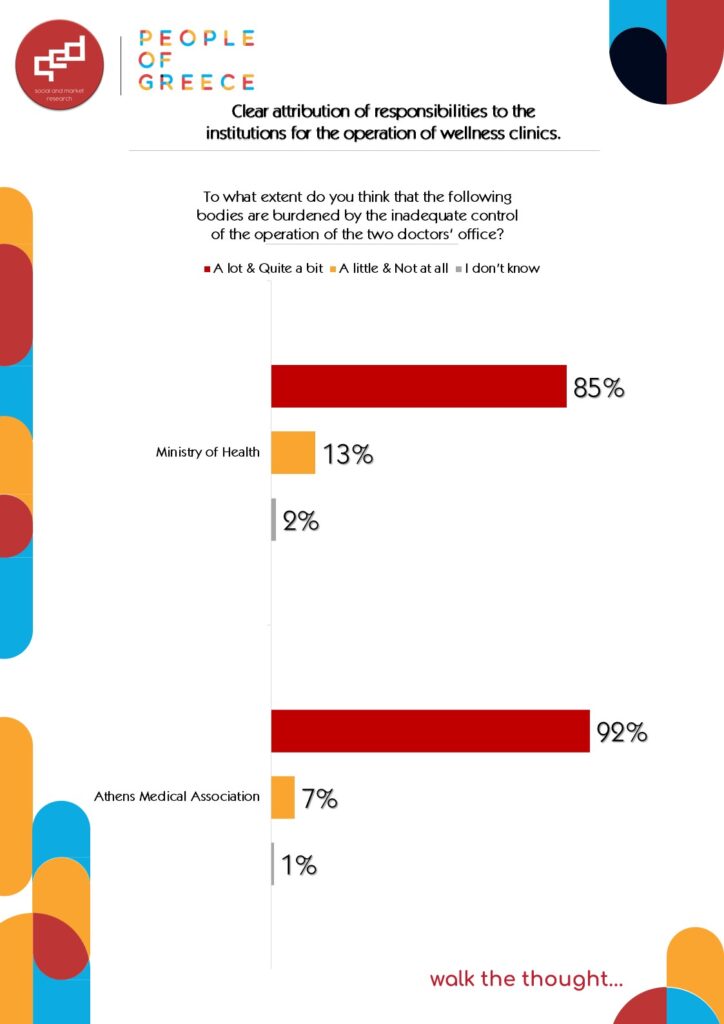
Clear accountability of the institutions responsible for the operation of wellness clinics.
Statements by Androulakis and Tsipras at the Thessaloniki International Trade Fair
The announcements made by Androulakis and Tsipras are considered similar to one another and utopian.

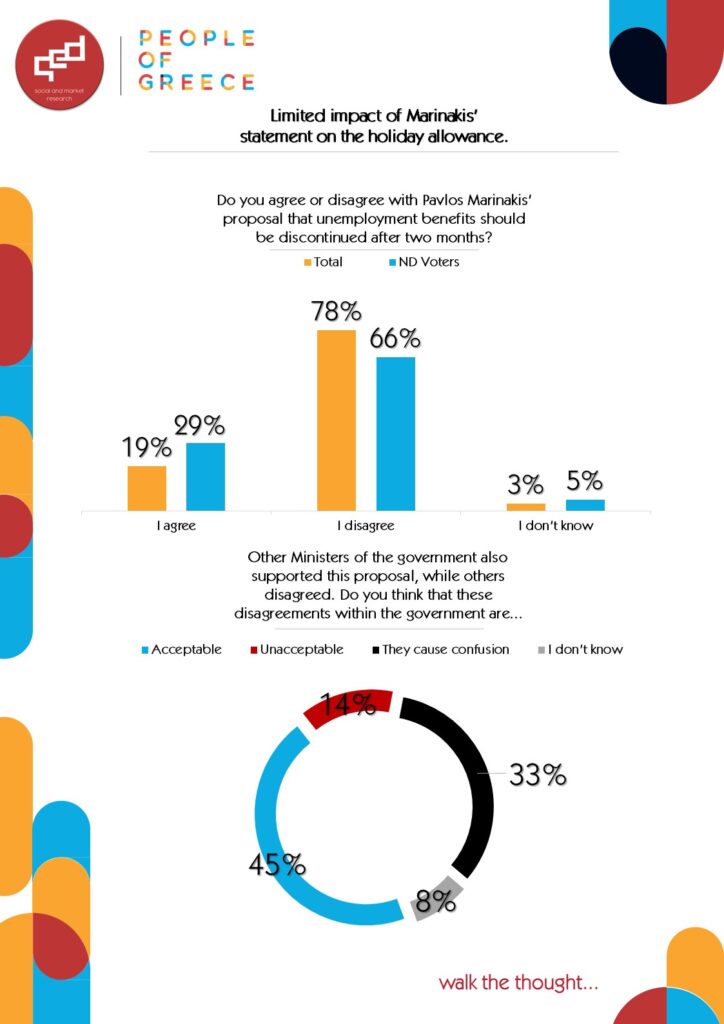
Marinakis’s Statements on the Suspension of Unemployment Benefits
Marinakis’s statement on vacation pay received limited attention.
Kasidiaris’s Release from Prison
Greeks are watching Kasidiaris’s return, but they support his institutional exclusion.


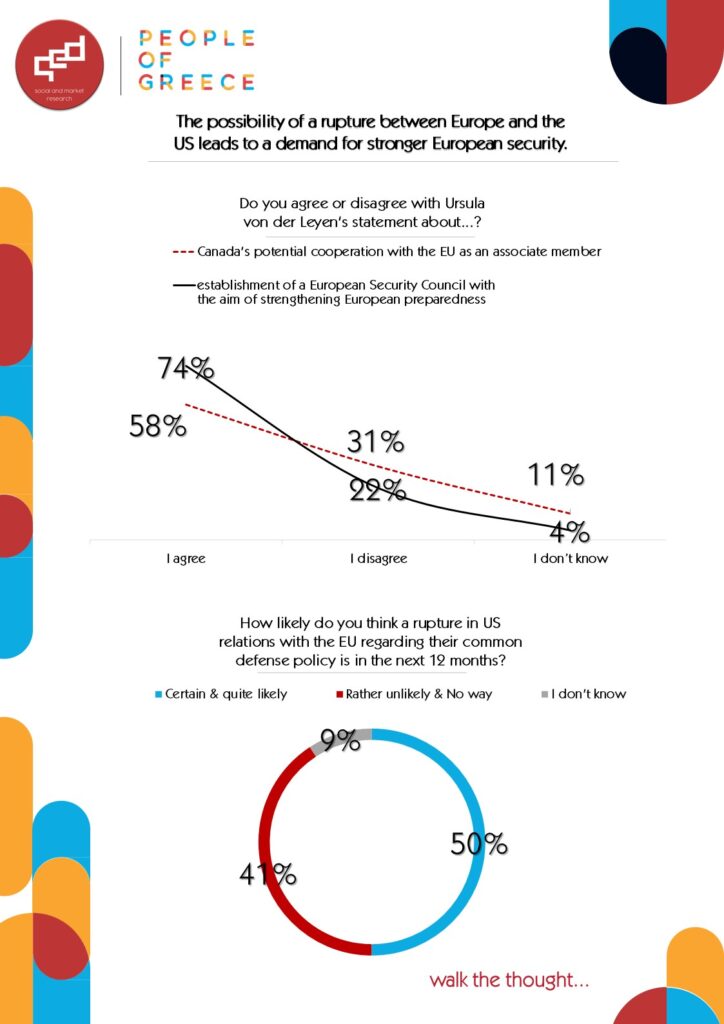
Statements by the EU President on Canada and the European Security Council
The possibility of a rift between Europe and the U.S. is leading to calls for stronger European security.
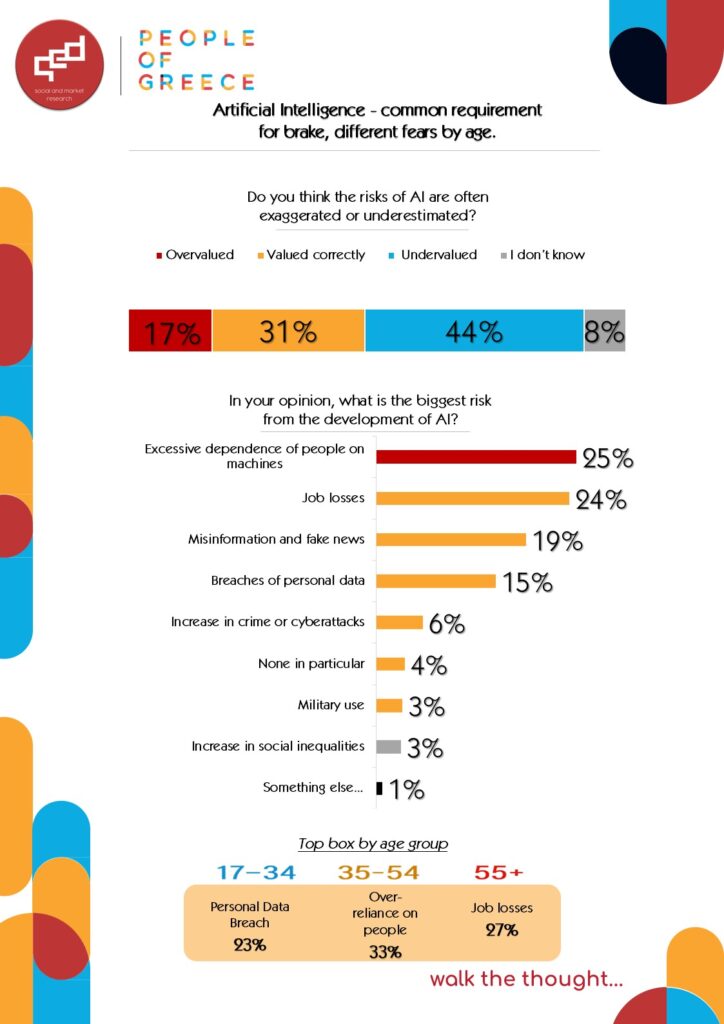
Risks Associated with the Use of Artificial Intelligence
Artificial Intelligence—a common call for restraint, but fears vary by age group.

Walk the thought – what new questions do our findings raise?
- What exactly do Greeks expect from the government in cases of medical malpractice?
- To what extent does the assessment of a proposal as “well-thought-out” influence trust in the politician presenting it?
- When two parties propose the same measure, which one do people believe is more capable of implementing it?
- Why do citizens oppose shortening the duration of unemployment benefits: because they consider the measure socially unjust, or because they do not believe it will lead to job-seeking?
- When is a public disagreement among ministers considered democratic pluralism, and when is it considered a lack of coordination within the government?
- If a political party is legally banned, do citizens believe its ideas are more likely to lose or gain influence?
- What do they fear most in a potential U.S.–EU rift? Reduced security, economic costs, greater dependence on Europe, or something else?
- Do those who use artificial intelligence the least fear it the most?