


12 Oct People of Greece – Weekly snapshot 30/9-7/10
Posted at 09:51h
in Newsletters

The People of Greece platform surveyed Greek men and women on:
- the MedWatch platform for monitoring private medical practices,
- wellness and personal development services,
- the safety of urban infrastructure, following the explosion in a building in Plaka and cracks in buildings in Kypseli,
- government measures to address rising fuel prices,
- Anna Vissi and the relationship between popularity and cultural value,
- the likelihood that a series of international events will take place by the end of the year.
What did the survey reveal?
News Index
Fuel, Plaka, and Vissi Top the News
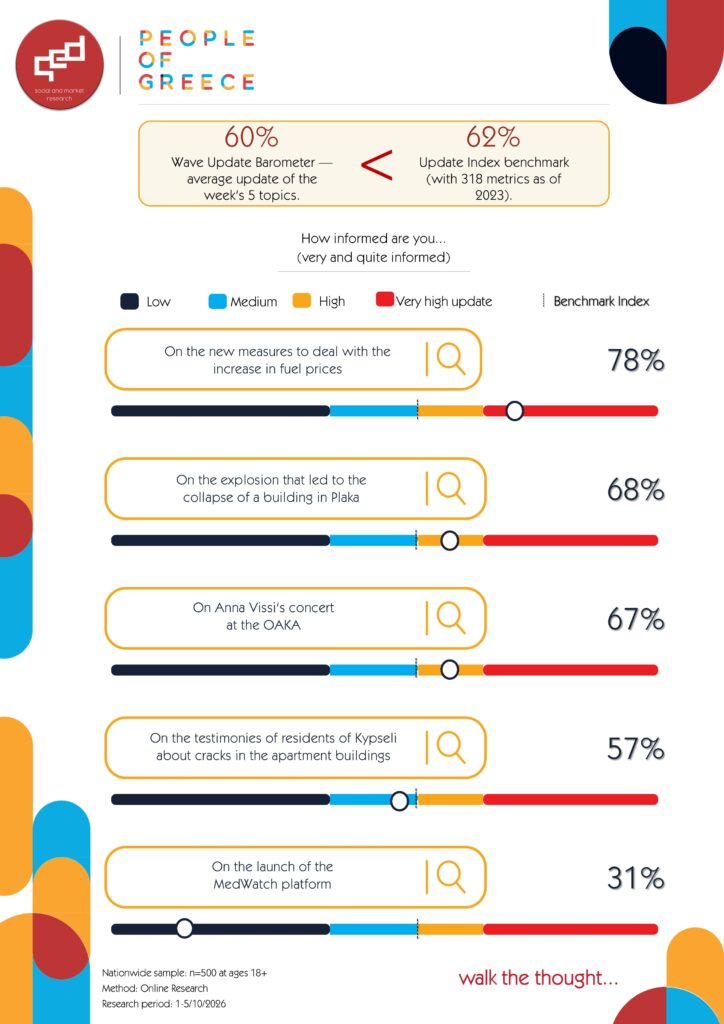
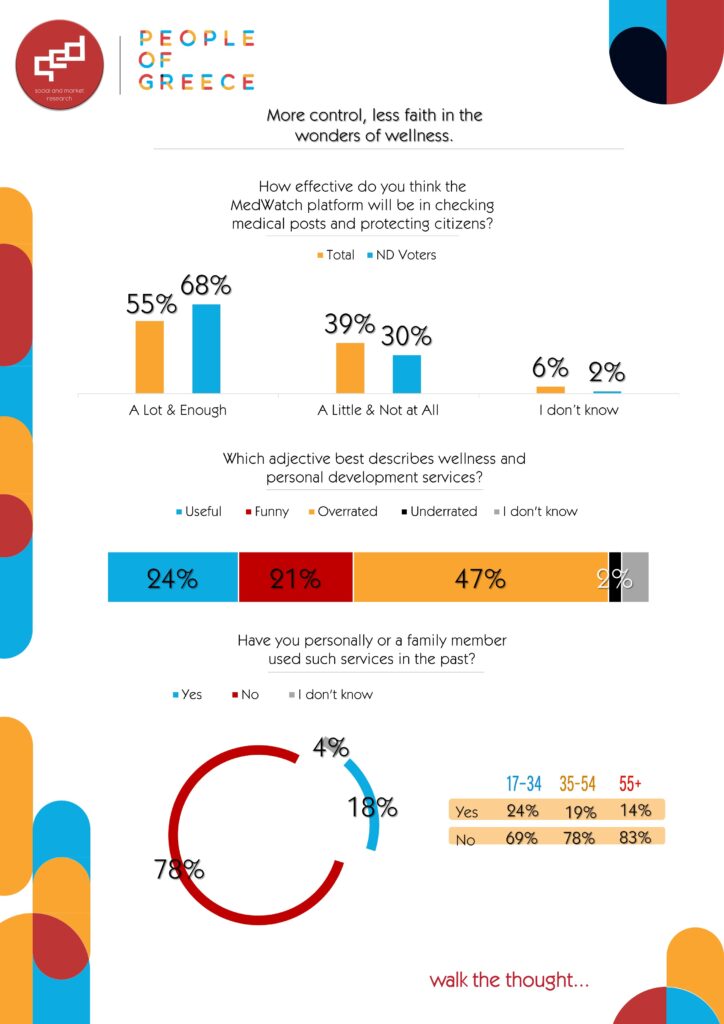
Wellness and Personal Development Services
Positive reception of the MedWatch platform.
Explosion in Plaka
Cities with cracks in their security.

Fuel Cost
Energy costs are high, and subsidies are insufficient.

Anna Vissi Concert
Vissi is popular, but popularity is not a cultural value.


Future Pulse – What Lies Ahead?
Concerns about oil and cyberattacks; low hopes for peace.

Walk the thought – what new questions do our findings raise?
- Is trust in MedWatch driven more by the need to protect citizens or by trust in the government that established it?
- Would trust in MedWatch increase if its operation were entrusted to an independent body rather than a government agency?
- What are people primarily seeking when they turn to wellness and personal development services: relaxation, health, self-awareness, professional growth, or social acceptance?
- How much do Greeks trust state and municipal infrastructure safety inspections?
- Which expense do Greeks cut back on first when energy costs rise: entertainment, food, heating, transportation, or savings?
- Is there a difference between “liking” an artist and “considering them important”?
- Why do younger people associate popularity more closely with cultural value? Is it because of social media, streaming, influencers, or a different understanding of the concept of culture?
- What factors shape the perception of the likelihood of an international event: access to information, personal fear, trust in institutions, or past crises?